
April 16, 2026
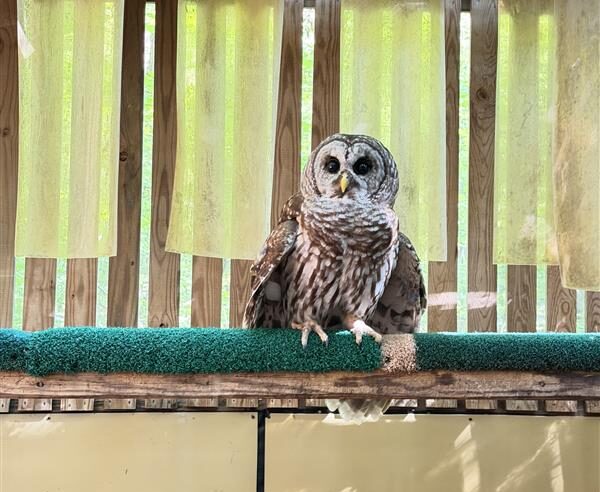
Every spring, the Carolina Raptor Center Hospital prepares for an influx of calls about Barred Owls trapped in chimneys. Barred Owls are cavity nesters, meaning they don’t build traditional nests but instead rely on natural hollows, like old tree trunks, to raise their young. Unfortunately, uncapped chimneys can closely resemble these ideal nesting sites, leading owls to make a dangerous mistake.
Once inside, chimneys can quickly become a trap. Owls often struggle to climb back out, and repeated attempts to escape can lead to exhaustion and injury. These situations can be detrimental, with outcomes ranging from minor issues to more serious medical concerns. Recently, the hospital has treated several such cases:
Patient #27683, was admitted on April 3. This owl arrived with soot-covered feathers and slight damage to its tail. Thankfully, the injuries were minimal, and the owl was quickly cleared for release.
On the other hand, patient #27667, admitted on March 22, faced more serious challenges. This owl arrived with a very dull beak and talons, likely worn down while attempting to climb out of the chimney. Fortunately, this is a temporary issue, as beaks and talons continue to grow over time, much like human nails.
More concerning, however, were the owl’s additional injuries. It suffered significant abrasions to both nictitating membranes, which are the inner eyelids that help keep a bird’s eyes moist and protected from debris. Patient #27667 also had deep wrist injuries that required sutures, likely caused by repeated attempts to escape the chimney.
Thanks to the expertise and dedication of the hospital team, both of these owls are expected to make full recoveries and return to the wild.
How you can help:
- Install a chimney cap or screen before nesting season begins
- If you suspect owl activity in your chimney, contact the Carolina Raptor Center Hospital at 704-875-6521 ext. 125 for guidance
Taking these simple steps can help prevent injuries and keep these remarkable birds safe during nesting season.
More Success Stories:
Jun. 09, 2026
A Rare Rescue Begins to Take Flight
May. 28, 2026
First Hawk Chicks of the Season Arrive
Apr. 16, 2026
Two Barred Owls Saved from Chimneys
Feb. 11, 2026
Owl Caught in a Fence
Jan. 13, 2026
A Hawk Found at a Water Treatment Facility

Dec. 15, 2025
A Leucistic Hawk Entangled in Fishing Line
Nov. 18, 2025
The Long Road to Recovery of a Red-Tailed Hawk
Oct. 13, 2025