
November 18, 2025
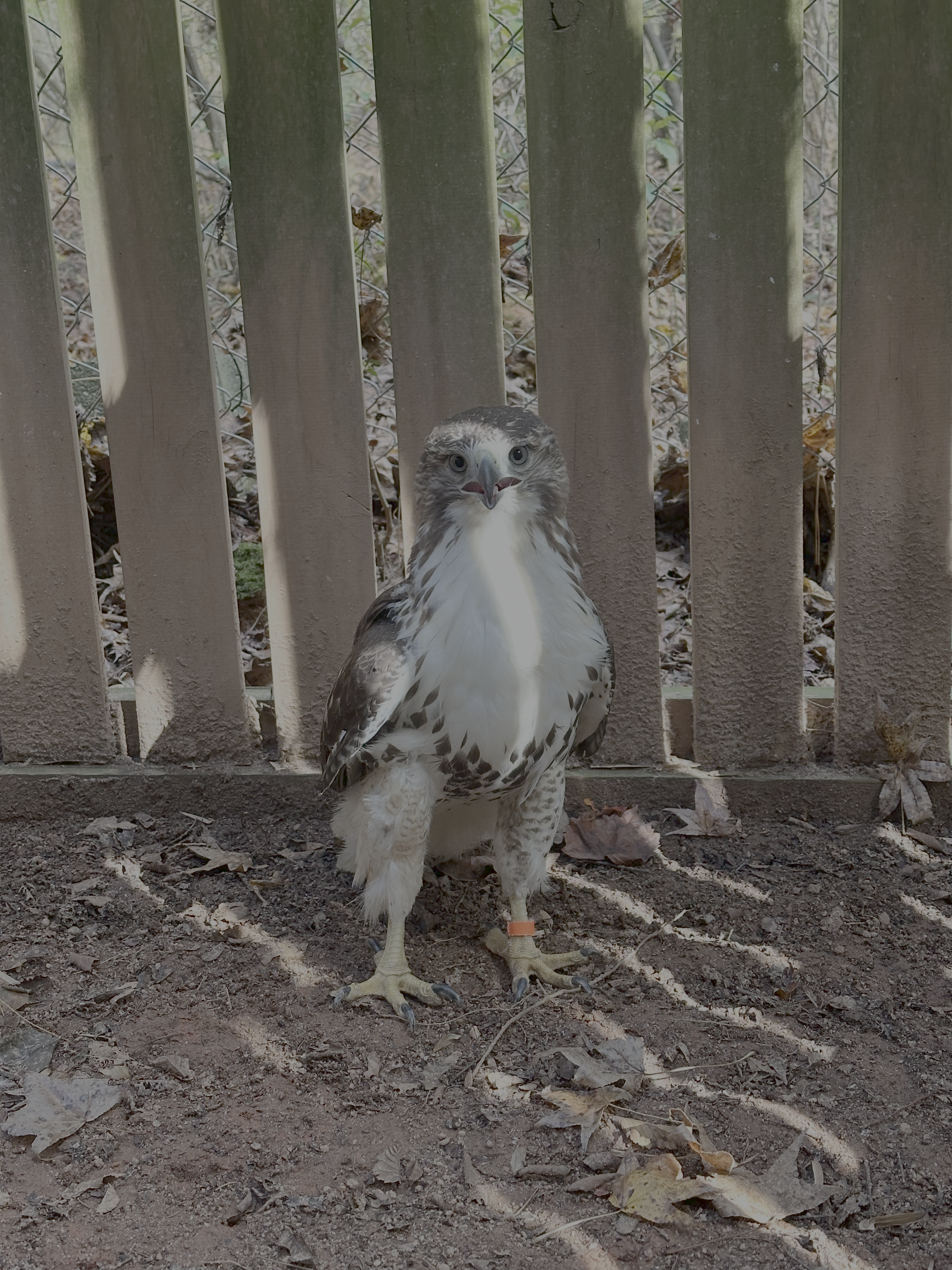
Car-related injuries are some of the most common injuries we see at the Carolina Raptor Center. Injuries sustained from cars can vary greatly; some patients will arrive with only a bit of road rash and be out of the hospital after only a couple of weeks. Others will spend months in our care recovering from injuries like eye trauma, broken bones, soft tissue wounds, or a combination of these things – exactly what happened to Patient #27328.
Patient #27328, a Red-tailed Hawk, came into our care in early September after they were seen colliding with the side of a moving vehicle. Upon its intake exam, our staff palpated a fracture in the right leg. Following the initial exam, radiographs were done to help determine the location and type of fracture.
Orthopedic Surgery
Our team determined that this patient would be a good candidate for surgery. In cases like these, it is important to perform surgery as soon as possible to prevent the patient from deteriorating or the fracture from destabilizing. The surgery was performed later that week to place several metal pins in the hawk’s leg to help stabilize the bone and assist it in healing in place.
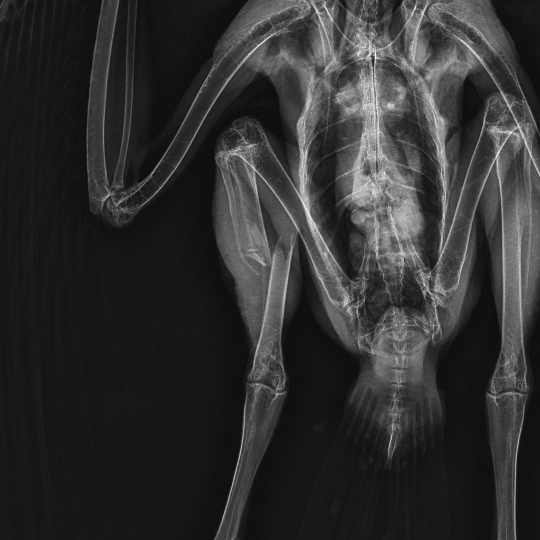

Of course, our patients don’t always understand that we are trying to help them heal, so RTHA #27328 managed to pull out one of the metal pins in their newly stabilized leg, within only a few days of the surgery. Another surgery was performed to replace the removed metal pin, and our patient was continuing on the way to a successful recovery.
Orthopedic surgery is typically performed when a fracture is too unstable to heal on its own. These surgeries can range from placing pins inside the bones to secure the fractured pieces to applying an external fixator to stabilize the bone on the outside. These surgeries are extensive and can take up to several hours, requiring specialized knowledge of bird anatomy, and can differ vastly from the average veterinary procedure.
Help Prevent Car Strikes
Oftentimes, raptors like Patient #27328 end up in car collisions while attempting to hunt. They’ll perch near roadways, which make great clearings to spot small mammals that feed on litter and debris along the road.
An easy way to help raptors is to never throw anything out of your car, even biodegradable items like apple cores and banana peels. These items attract things like mice and rats, which attract raptors like this Red-tailed Hawk.
A Positive Prognosis
Thanks to our Raptor Hospital team and their continual care, we are hopeful that with a few more weeks of exercise following the 3 major surgeries, this young Red-tailed Hawk will regain his strength and eventually be released back into the wild.
Your donations support the care of severely injured raptors like this Red-tailed Hawk, whose major surgeries and intensive medical care cost nearly $9,000.
More Success Stories:
Nov. 18, 2025
The Long Road to Recovery of a Red-Tailed Hawk
Oct. 13, 2025
Eastern Screech Owl Injured by a Cat
Sep. 09, 2025
On the Wings of Migration: Broad-winged Hawks at Carolina Raptor Center
Aug. 28, 2025
Releasing 7 Young Vultures
Aug. 11, 2025
Caring for a Baby Black Vulture

Jul. 07, 2025
Cooper’s Hawk Struck By a Car
Jun. 09, 2025
A Sticky Situation: Rescuing a Barred Owl from a Glue Trap
May. 13, 2025